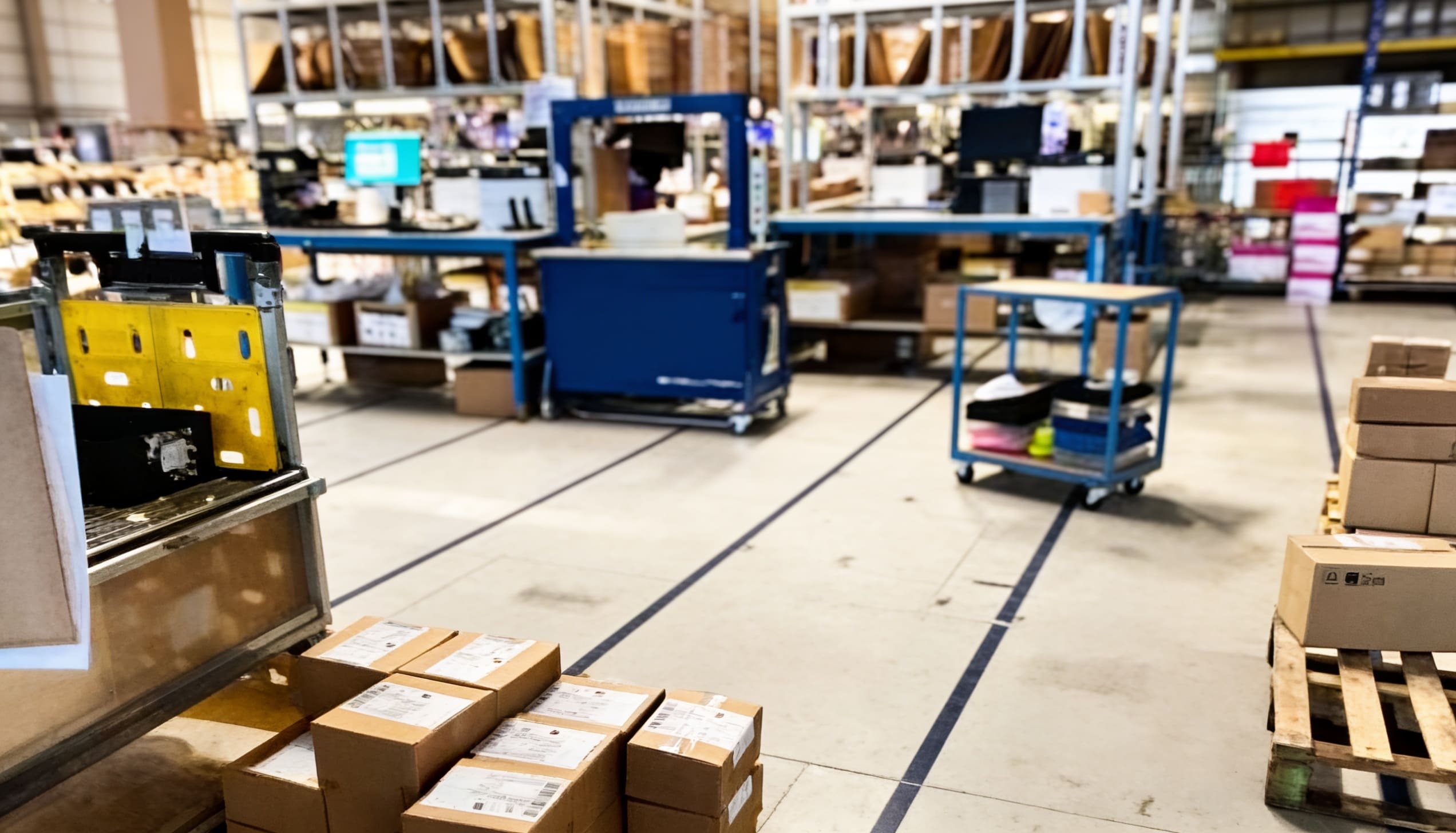

In the fashion and textile sector, logistics often experiences extreme fluctuations.
At the end of November, traffic skyrockets. Orders pile up. Stock moves at full speed. And three weeks later, returns flood back. Welcome to the reality of fashion and textile logistics.
Sales, new collection launches, promotional campaigns, or events like Black Friday can dramatically increase order volumes in just a few days.
For an e-commerce fashion brand, managing seasonal peaks isn’t just another challenge—it can make or break the year’s profitability. Market analysis shows that the Black Friday / holiday period can account for 30–50% of a fashion online store’s annual revenue. Poor logistics during this period can cost you the entire year.
Without proper preparation, issues arise quickly: longer shipping times, order errors, overstressed teams, and rising costs.
Understanding seasonal peaks in fashion & textile

A busy annual calendar
Throughout the year, fashion e-commerce can see a 1:5 volume gap between slow months and peak months.
The good news: most volume peaks in fashion are predictable.
Sales (winter & summer) trigger large order volumes over short periods, often creating high pressure for fast shipping. In 2024, promotional purchases accounted for 34% of fashion spending in value during the first half of the year (French Fashion Institute), and promotions represented 37% of online sales.
Black Friday has become the ultimate stress test. In November 2024, lost parcels surged nearly 20% compared to 2023 during the week of the event. Carriers get overwhelmed, delivery times slip, and customers—accustomed to fast shipping—become instantly critical.
Collection launches (spring-summer, autumn-winter) generate massive stock intake and require fast SKU rotation.
Key takeaway : These dates repeat annually, but many brands still struggle—not due to lack of visibility, but lack of operational logistics preparation.
Why fashion logistics is unique
Fashion is not like other categories. Several characteristics make its logistics inherently complex:
- Multiple SKUs per product: One model may come in 5 sizes, 4 colors, sometimes men’s and women’s versions. One article = 40 SKUs. For ready-to-wear brands, that can mean thousands of SKUs in the warehouse.
- Seasonal collections: Stock refreshes 2–4 times a year, requiring massive warehouse intake each season.
- High return rates: 30–50% of fashion orders are returned. Reverse flows are as heavy to manage as outgoing flows.
- Packaging matters: A wrinkled or poorly packed garment immediately impacts customer experience.
These factors complicate storage, product location, order preparation, and real-time stock monitoring, especially during peak periods.
The true cost of poorly calibrated logistics
When logistics isn’t prepared for peaks, hidden costs accumulate fast:
Year-round overcapacity: Owning your warehouse or having a rigid contract means paying for peak capacity year-round, even during slow months.
Order errors spike: Under pressure, teams make mistakes, wrong SKU, size, or color. With 15–20 variants per item, errors multiply. Each mispacked parcel = a return, refund, negative review, and doubled logistics cost.
Overloaded customer service: “Where’s my order?” inquiries skyrocket. Without real-time tracking and communication, your teams bear the burden.
Backlogged returns: With 20–30% return rates, untreated returns tie up stock, immobilize cash, and lead to lost sales.
Three classic mistakes that drive up costs
Mistake #1: Hiring Temp Staff at the Last Minute for Every Peak
This is the most common—and most costly—reflex. Hiring temporary workers two weeks before a busy period means paying for their training during a time when every minute counts, accepting a higher error rate, and recreating the same problem at the next peak.
The skill ramp-up of a logistics operator takes time. A temp who sees the warehouse for the first time on D‑day will never reach the productivity of a trained operator—and won’t be there for the next peak.
Mistake #2: Overstocking “Just in Case”
Faced with uncertainty, some brands send more stock to the warehouse than necessary “just in case.” The result: pallets of SKUs that don’t move, overcrowded storage locations, and slowed picking because aisles are blocked.
Overstocking has a direct cost (occupied space) and an indirect cost (disorganization and picking errors). The right balance between availability and rotation must be found.
Mistake #3: Processing Returns “Later”
During peaks, returns are often put on the back burner. Parcels accumulate, and we’ll process them “when it’s calmer.” The problem: unprocessed returned stock represents potentially resellable products that sit idle.
In fashion, a returned item not restocked within 48 hours often equals a missed sale: the size or color may show as “out of stock” online while the product is physically available in the warehouse.
Mastering returns : reverse logistics as a profit lever

The numbers that justify dedicating resources
In fashion, the average return rate ranges between 25% and 50% depending on categories and markets. The reasons are varied: size issues, ordering multiple sizes to try on, change of mind, or product not meeting expectations.
During a sales peak, this means thousands of parcels return to the warehouse in the days that follow.
For logistics, each return involves multiple steps: receiving the parcel, inspecting the item, sorting, restocking or reconditioning. Without an efficient organization, these flows can quickly overwhelm teams.
A returned product left waiting for processing for 5 days results in:
- Stock blocked and not shown as available online
- Capital tied up
- Delayed customer refund or credit, generating customer service contacts
The 4 step returns processing workflow
To achieve the 48-hour target between parcel reception and restocking, the process must be industrialized:
Step 1 — Receiving and Recording
Each returned parcel is scanned upon arrival. The system records the return and automatically triggers the customer notification (“your return has been received”). This step alone significantly reduces customer service inquiries.
Step 2 — Quality Control
Each item is inspected according to a standardized checklist: overall condition, labels present, no signs of wear or defects. Three possible outcomes: direct resale, reconditioning, or quarantine/destruction.
Step 3 — Immediate Restocking
Approved items are immediately reintegrated into active stock rather than set aside for batch processing. Online stock is updated in real time via WMS / e-commerce platform integration.
Step 4 — Triggering Refund or Credit
Once quality control is validated, the refund or credit is automatically triggered through the shop integration. Zero manual intervention, zero additional delay.
The key role of the 3PL : What to expect from your provider
Seamless technical integration
Un bon prestataire 3PL pour la mode doit être capable de s’intégrer nativement avec votre boutique en ligne : A good 3PL provider for fashion must be able to integrate natively with your online store: Shopify, PrestaShop, WooCommerce, Magento, Oxatis, Gezy, or a proprietary solution. This means:
- Real-time stock synchronization
- Automatic shipment and tracking status updates
- Automatic triggering of refunds upon return validation
- Stockout alerts before inventory hits zero
Without this integration, there’s always a gap between actual stock and what your site shows. This leads to overselling, disappointed customers, and cascading manual work.
Capacity to absorb volume variations
This point is often underestimated when choosing a provider. It’s not enough to compare the cost per order under normal conditions. You must understand how the provider handles peaks:
- What is their maximum processing capacity per day?
- How much lead time is required to adjust their teams?
- Do they have flexible storage spaces to absorb massive new collection entries?
- How are peaks billed (extra charge, flat fee, tiered pricing)?
Concretely, the provider must offer flexibility. This means being able to increase capacity in a few days before a peak, then reduce it at the right time.
This model, often offered by specialized 3PL providers, only charges for the volumes actually stored. You don’t pay for empty square meters in January, nor do you end up stacking products under poor conditions in November because you underestimated volumes.
A provider like Dispeo can absorb significant peaks without you restructuring your internal organization. Resource pooling among multiple clients allows each to benefit from a professional infrastructure scaled for peak volumes without bearing fixed costs alone.
Fashion dedicated processes
The logistics of a book or electronic device is nothing like that of a garment. Each product may exist in 4 sizes, 6 colors, multiple packagings. The risk of confusion is constant.
Your 3PL must master:
- Appropriate storage (hanging vs folding, handling fragile materials)
- Careful packaging (dividers, flat boxes for folded items)
- Size and color management: a picking error on a fashion order almost always leads to a return
- Licensed items or special labeling management (re-ticketing, customs re-labeling…)
And packaging matters: a client receiving a designer dress in a crushed box will not reorder.
A good fashion order preparation includes:
- Rigorous SKU management with picking systems that reduce human errors;
- Ability to personalize packaging according to the brand (boxes, tissue paper, cards, stickers) without slowing down throughput;
- Handling of kitting (coordinated sets, promotional bundles, gift boxes) without losing traceability;
- Rapid ramp-up without quality degradation when volumes triple in a week.
These capabilities cannot be improvised. They require equipment, tested processes, and teams trained in the specifics of the sector.
How to properly for a seasonal peak : The operational plan

8 weeks before : Align logistics and marketing
The starting point is communication between marketing/sales teams and the logistics provider. Eight weeks before the peak, your 3PL must know:
- Estimated order volume for the period
- Priority SKUs and planned stock levels
- Any special operations: gift packaging, personalization, promotional inserts
- Exact dates of stock arrival in the warehouse
This information allows planning human resources, organizing storage space, and anticipating consumable purchases (boxes, tissue paper, tape…).
4 weeks before : Prepare the warehouse
Operational preparation concretely includes:
- Recalibrating storage locations: high-volume SKUs should be placed near picking zones to reduce movement
- Creating a buffer stock of consumables: running out of boxes in the middle of Black Friday must be avoided
- Setting up dedicated return flows: during peaks, returns arrive simultaneously with outgoing orders; separate zones and teams are required
- Load testing management tools: WMS, e-commerce integrations, labeling — everything must be validated before the event, not during
7 days before : Final adjustments
The week before the peak, focus on:
- Validating physical stock vs system stock: any discrepancies must be corrected before the start
- Training or briefing temporary staff if the team has been expanded
- Verifying integrations with the online store: order statuses, stockout alerts, and shipping confirmations must be synchronized in real time
Key metrics to monitor your fashion logistics
What isn’t measured cannot be improved. Essential logistics KPIs for a fashion e-merchant
| Indicator | Target | What It Measures |
|---|---|---|
| Orders shipped D+1 | > 95% | Ability to meet deadlines during peaks |
| Picking error rate | < 0.5% | Picking and quality control accuracy |
| Average return processing time | < 48h | Efficiency of reverse logistics |
| Return resale rate | > 85% | Profitability of the returns flow |
| Stock reliability (WMS/physical discrepancy) | < 1% | Accuracy of ongoing inventory |
| Stockout rate | < 2% | Product availability online |
In summary
In the fashion sector, logistics must deal with multiple challenges: a high number of SKUs, frequent returns, and periods of sharply increased activity.
Absorbing seasonal peaks without blowing up costs is possible. But it cannot be improvised 10 days before.
Known levers:
- Anticipate 8 weeks ahead, not 2
- Organize return flows as rigorously as outgoing flows
- Choose a 3PL familiar with fashion specifics
- Measure the right indicators to manage in real time
Going further : seasonality should not be your problem
Your role is to manage your catalog, campaigns, and customers—not to wonder every autumn if your warehouse can handle November.
At Dispeo, teams support fashion and textile e-merchants facing exactly these challenges. Flexible storage, order preparation adapted to sector specifics, returns management: solutions are sized for peaks without charging you for unused capacity the rest of the year.
Do you want to see concretely what this would look like for your business? Talk directly with a Dispeo expert.